
In 2026, the investment landscape is changing a lot as technology advances, consumers’ habits change, world economy shifts and sustainable businesses are in demand. Investors are looking beyond traditional stocks and fixed-income instruments to find emerging market sectors that may impact the stock market in the next 10 years.
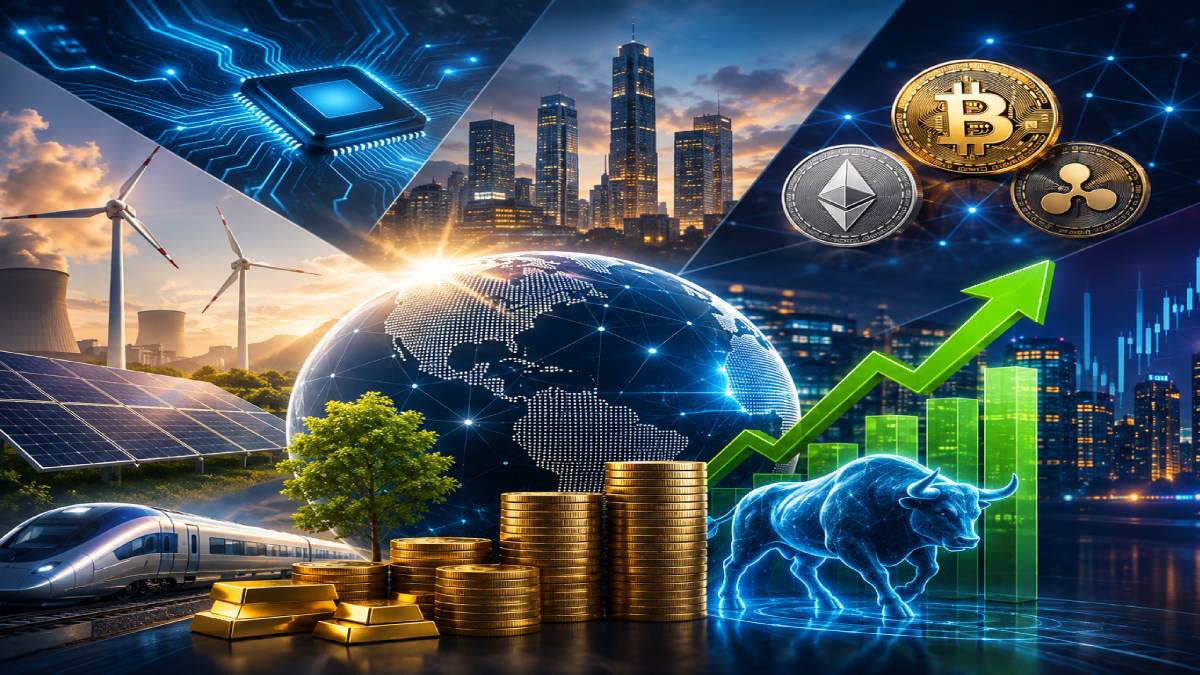
Artificial Intelligence and clean energy to digital infrastructure and healthcare innovation are some of the investment trends that are likely to be in the news in 2026.
One of the most important investment themes is artificial intelligence (AI). Generative AI, automation tools, machine learning and AI-powered enterprise software is rapidly transforming industries ranging from technology and finance to healthcare, manufacturing and retail. And semiconductors, cloud computing, data centers, cybersecurity and AI software could benefit from the rising demand for computing power and digital infrastructure. Investors are therefore watching the whole AI ecosystem rather than just the big tech companies.
Another major trend is data centres and digital infrastructure expansion. AI needs huge computing capacity, and cloud services and digital platforms continue to generate demand for storage and processing. That has fueled the interest in data-centre construction, networking equipment, power management, cooling systems, etc. The growth of AI could therefore create opportunities in other industries, not only in software.
Renewable energy and clean technologies will still be major investment themes. Governments and businesses around the world are still interested in reducing emissions and improving energy security.
Solar energy, wind energy, battery storage, electric mobility, green hydrogen are among the areas that will attract investment. At the same time, traditional energy infrastructure will be important still, as global economies depend on reliable electricity and fuel. The transition to cleaner energy will therefore involve a mix of established and emerging technologies.
The growing demand for electricity is closely linked to another major component of power infrastructure: power infrastructure. Data centres, electric vehicles, manufacturing plants and expanding urban populations need reliable electricity supply. This could push more money toward electricity transmission, distribution networks, grid modernisation, transformers and energy storage technologies. The investment discussions with companies that are in charge of the infrastructure to supply electricity efficiently would be more acute.
Healthcare and biotechnology are also a key area to watch in 2026. Advanced technology in personalised medicine, diagnostics, medical devices and biotechnology are creating new options for treating and managing diseases. The aging global population is also creating a long-term demand for healthcare. But healthcare investments have their own risks too as clinical development, regulatory approvals and research results are very uncertain.
The financial technology sector is also evolving rapidly. Digital payment, online banking, automated financial services and technology-led lending have all changed how people and businesses interact with financial institutions. Artificial intelligence is increasingly being incorporated into financial analysis, customer service and fraud detection. Investors are watching how established banks and fintech companies adapt to these technological changes.
There is also a bigger trend that is being noticed - cybersecurity. With businesses increasingly relying on cloud services, connected devices and AI systems, the state-of-the-art digital infrastructure has become increasingly important to protect. Cybersecurity spending will keep increasing with the need to protect customer information, financial systems and critical infrastructure. Companies with identity protection, network security and threat detection technologies could take advantage of this structural demand.
Defence and aerospace technology are also emerging as important investment themes. Governments in several countries are increasingly investing in national security, domestic manufacturing capabilities and advanced technologies. Drones, satellites, communications systems, electronic technology and aerospace manufacturing could also be more attractive to investors given geopolitical risks and the regulatory environment in the sector.
For Indian investors, domestic infrastructure and manufacturing are significant topics. Government spending on roads, railways, airports, renewable energy, logistics and industrial infrastructure will create opportunities for engineering, construction and manufacturing companies. And increased domestic production and supply chains will also be supportive for electronics, cars, machinery and components.
Another trend to watch is that of the growing interest in alternative assets and digital assets. Cryptocurrencies and blockchain-based technologies are still attractive to investors, but they are highly volatile and carry considerable risk. The regulation, institutional participation and blockchain applications will all be key in the future of the sector. Investors should be very careful about the digital asset and realize that there will be significant price swings.
Gold and other traditional safe-haven assets might also be relevant. Investors tend to look in the direction of assets that may provide diversification in times of economic uncertainty, geopolitical tensions or market volatility. Gold is a part of a diversified portfolio, but it shouldn’t be viewed as a sure way to protect against losses.
In addition to this, there is also the rise of thematic investing. Investors are no longer just interested in companies which fall in the same old categories as other traditional industries and investing more in the themes that matter - AI, ageing population, clean energy, cybersecurity, space technology and digital infrastructure. Exchange-traded funds and other diversified investment products can be good at investing in certain themes but should be evaluated for fees, holdings and risk.
At the same time, investors should be reminded that an investment trend doesn’t imply that every company within that sector will perform well. Valuations, earnings, competition, debt levels, management quality and broader economic status still matter. A rapidly growing industry can still have companies whose shares are overpriced or whose business models don’t deliver what it is supposed to.
Diversification is likely to be important in 2026. Rather than owning a portfolio of assets that are all about one common theme, investors may look to diversify their investments from one asset class to another (sector, country etc.) according to their financial goals and risk appetite.
As such, 2026 will be a year of continuing transformation in global investing. There are themes in artificial intelligence, digital infrastructure, clean energy, healthcare innovation, cybersecurity, manufacturing and evolving financial technologies that could shape investment conversations. But investors should take into account the long-term structural trends and the short-term market excitement.
Investing is a matter of research, and personal and professional advice must be taken prior to investment decisions, and if possible, with good advice from a financial professional. A market investment does not mean that you will make great money now - the best investment strategy is the one that is based on your own goals, time horizon, and the ability to take risks and not just follow the latest trend.





Comments
Please to leave a comment on this article.