
Today: On Wednesday, August 26, the Indian stock market could open on a positive note as global market cues were mostly supportive and crude oil prices fell further. Gift Nifty also pointed towards a higher opening for the Indian stock markets, but investors should be cautious with the big global events.

Gift Nifty was at 24,553, which is up about 81 points from the close of Nifty futures on Monday. The positive news comes after US stocks had ended higher yesterday and as crude oil prices and Treasury yields had been rising.
Market participants will keep track of the crude oil situation, US-Iran tension, institutional fund flows and future US economic data. We’re going to look at five things that could affect the Sensex and Nifty 50 in Wednesday’s trading session.
1. Gift Nifty Signals Positive Start
The Gift Nifty is pointing to a relatively good opening for Indian equities.

The index was at 24,553, about 81 points higher than the close for the Nifty futures. And the fact is domestic benchmarks could start Wednesday’s session with a good bounce.
But global markets are under pressure from a number of potential trigger points. In crude oil, geopolitical developments and upcoming US economic data could influence how the market will react to this.
Investors will also be looking at the Nifty 50 after the opening to see whether the Nifty 50 can continue to rise rather than rely on only the Gift Nifty signal.
2. Asian markets trade Mixed
Asian markets were mixed on Wednesday after Wall Street’s gains.
Japan’s Nikkei 225 declined 0.40 percent, and the broader Topix rose 0.20 percent. South Korea’s Kospi gained 0.26 percent, and Kosdaq fell 1.08 percent.
Hong Kong's Hang Seng index futures were higher at 8:01 a.m. in Hong Kong.
Despite the good close on Wall Street, the mixed performance suggests that investors are still selective. Technology stocks, bond yields, commodity prices and geopolitical events will be key to Asia and hence to Asian equity trading.
For Indian investors, the direction of Asian markets can influence sentiment during the opening hours, particularly when combined with signals from US markets and Gift Nifty.
3. Wall Street ends Higher Ahead of Nvidia Results
U.S. stocks were higher in yesterday’s trading on Tuesday as technology stocks were strong and Nvidia’s earnings seemed optimistic.
The Dow Jones Industrial Average rose 160.24 points, or 0.30 percent, to 53,577.40 and the S&P 500 gained 24.38 points, or 0.32 percent, to 7,677.24.
It was the technology-heavy Nasdaq Composite that was up 171.11 points, or 0.66 percent, to 26,151.30.
In addition, oil prices were falling, and bond yields were falling, so a better investor mood was also brought on.
Nvidia’s results are especially important to global technology stocks because it is at the centre of the AI investment cycle. A major surprise in its earnings, revenue forecast, or AI demand could change technology shares worldwide and may affect overall market sentiment.
4. US Treasury Yields Decline
US Treasury yields fell further as oil prices fell to their lowest level in about a week.
The benchmark 10-year US Treasury yield fell to about 4.65 percent, and the 30-year yield fell to 5.18 percent.
Falling yields can at least relieve equity markets because lower bond yields can increase the attractiveness of risk assets. They can also influence expectations for future interest rates and borrowing costs.
In this way, Indian markets will be closely watching US bond yields to watch for US bond yields as a whole, and investors are also concerned about the Federal Reserve's approach to monetary policy direction in the future.
Any sharp movement in US yields could trigger changes in global capital flows and currency markets, meaning the trend applies to Indian equities as well.
5. Crude Oil Falls More Than 2%
Crude oil prices emerged as one of the most important positive factors for equity markets.
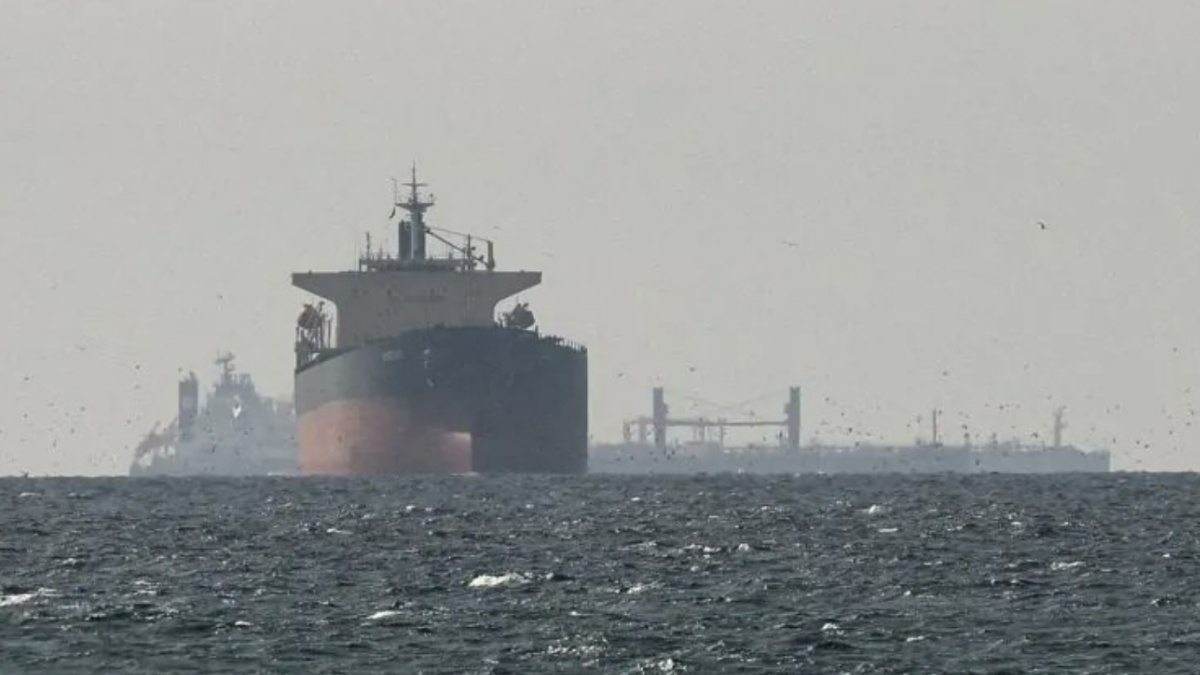
Oil prices fell more than 2% in late morning trading, extending losses to almost 2% from the previous day. The decline followed hopes that the Strait of Hormuz could reopen after Iran resumed talks with Oman over the management of the strategically important waterway.
Brent crude fell 2.63 percent to $86.25 a barrel; West Texas Intermediate crude fell 2.33 percent to $80.44 a barrel.
A steady decline in crude prices could be good for India because the country imports a large part of its crude oil requirement. Lower oil prices can relieve the pressure on the country’s import bill, inflation and corporate input costs.
But oil prices are incredibly sensitive to geopolitical events. Any further escalation of the US-Iran conflict or renewed disruption around the Strait of Hormuz could quickly reverse the recent decline.
Gold Prices Remain Elevated
Gold prices were relatively steady ahead of important US inflation data that could provide clues about the Federal Reserve’s interest-rate trajectory.
Spot gold was almost unchanged at $4,654.17 an ounce after a more than three-month high late in the previous session. US gold futures were up 0.4 percent to $4,711.40, while spot silver rose 0.2 percent to $68.80 an ounce.
As shown by the resilience of gold, investors are watching inflation, interest rates and geopolitical risks very closely.
Investment in gold and other commodities will also affect the Indian market and currency expectations, inflation outlook and investor positioning.
US-Iran Developments in Focus
Geopolitical changes will be an important factor for Indian equities.
The Strait of Hormuz has had a direct impact on crude oil prices. The waterway is of great importance for global energy supply, and a shutdown would cause a great deal of disruption and a sharp rise in oil prices.
On the other hand, discussions of the waterway have helped to reduce some of the risk premium in crude.
So investors will watch the region closely and will be monitoring further developments from the region. A further escalation would be a risk sentiment might be negative for risk sentiment, and a de-escalation would also weigh on the stock market, and signs of a de-escalation might add some support for global equities.
In addition to this, institutional fund flows are also important
Apart from global cues, domestic investors will track foreign institutional investor (FII) and domestic institutional investor (DII) activity.
Big foreign fund outflows can lead to pressure on Indian benchmark indices, especially during periods of global uncertainty. On the other hand, strong domestic institutional buying can provide some cushion against overseas selling.
Therefore, traders will monitor the latest flow data alongside currency movements and market breadth to see if the positive opening indicated by Gift Nifty can continue.
What should investors watch today?
The Indian market begins its day with some strong global signals. Gift Nifty indicates a higher opening, Wall Street finished in positive territory, Treasury yields fell, and crude oil prices fell.
But investors cannot ignore the risks. Nvidia’s earnings, US inflation data, developments around the US-Iran conflict and movements in crude oil could also cause volatility.
For the Sensex and Nifty 50, the immediate question will be: Can the indices sustain the early gains, and how will traders react to global signals during the trading session?







Comments
Please to leave a comment on this article.