
Alibaba shares fell sharply Monday after the Chinese technology giant said it will issue a $10.2 billion share issue to fund its AI expansion and investors were worried about dilution in shareholders by the discounted issuing and the dilution of the stock. The shares fell as much as 10.5 percent as early as late in the morning but recovered.
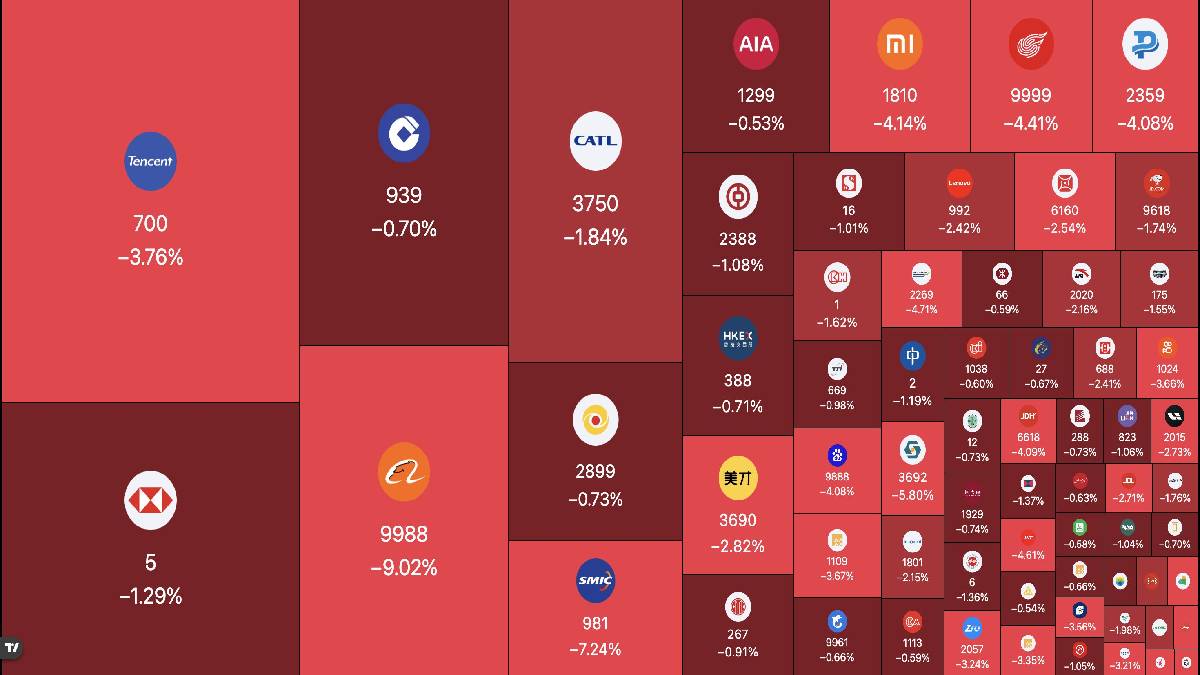
The problem came after Alibaba announced it would sell 710 million new shares at HK$112.70 each, a discount of 8.4 percent to the company's Friday closing price of HK$123. The offering will raise around HK$80 billion or $10.2 billion and Alibaba will use the money to enhance its artificial intelligence capabilities and infrastructure.
The scale of the market reaction points to investor doubts about the high capital needed to compete in the worldwide AI race. Alibaba is positioning artificial intelligence as a market opportunity but investors are increasingly worried about whether the company’s huge spending commitments will ultimately translate into sustainable profits.
And the discounted share sale was particularly significant because issuing new shares at below-market value can dilute the ownership of existing shareholders. Alibaba’s new shares represent about 3.6% of its enlarged share capital, adding to investors already assessing the company’s rising AI expenditure.
Even with the negative stock market reaction, the fundraising itself attracted strong investor demand. The placement drew approximately $28 billion in orders, nearly three times the amount raised. So long-only investors and sovereign wealth funds were key players, which suggests that institutional investors are still interested in Alibaba's long-term AI strategy despite the short-term risk.
Alibaba must now make a decision at a crucial time for the company. Its e-commerce business is showing signs of weakening and artificial intelligence and cloud computing are becoming more and more important in its future strategy. It is also trying to establish itself as one of China’s leading AI players with its Qwen family of AI models and AI infrastructure-building.
But the spending is so high that profitability has been raised.
Alibaba has just reported a 75% year-on-year decline in quarterly net profit and a huge increase in capital expenditure on its AI investment programme. The company also reported negative free cash flow in the last quarter, further increasing investor uncertainty about how quickly its AI investment will be able to generate returns.
Thus the market’s reaction is not just the share placement itself. Investors are weighing the potential long-term benefits of Alibaba’s AI ambitions against the immediate financial costs of building data-centre capacity, developing models, purchasing computing space and competing with other major technology companies.
Alibaba has said its AI investment will eventually lead to stronger growth in its cloud business and to the economics of its cloud industry in general. Increasing AI adoption will not only drive more revenue, but also put it in a stronger position in China’s rapidly growing tech ecosystem.
The sell-off also led to the broader weakness on Hong Kong technology stocks and also added to the pressure on the broader market. Alibaba is a major Hang Seng constituent and as a large Hang Seng component, the stock can have a huge impact on sentiment of stock market investors at large scale.
The fundraising attracted participation from some major institutional investors and Alibaba Chairman Joe Tsai and CEO Eddie Wu also purchased shares in the company. Tsai purchased about 720,000 Hong Kong-listed shares and Wu bought about 350,000 shares according to stock exchanges.
That insider participation may be interpreted as a sign of confidence in Alibaba's long-term strategy, even as the market reacts negatively to the immediate dilution and funding requirements.
The episode highlights a growing dilemma for big tech companies around the world: how much capital should be invested in the AI race before investors start demanding clearer returns?
Alibaba’s answer will largely depend on whether its AI investments can translate into stronger cloud growth, increased adoption of its models and eventually higher profitability.
But investors have given an instant short-term verdict. Alibaba’s decision to raise $10.2 billion at an 8.4 percent discount triggered a dramatic sell-off, wiping out a large portion of its market value and reigniting attention on the cost and possible payoff of China's AI ambitions.
The next big challenge for Alibaba will be showing that the billions being invested into artificial intelligence can ultimately generate returns large enough to justify the dilution and enormous capital commitments.




Comments
Please to leave a comment on this article.