
HCL is embarking on a large expansion program with capital investment of over ₹7,000 crore over the next five to six years. The company announced the plan on August 18, 2026, as part of a longer-term plan to scale mining operations, expand exploration, revive existing assets and take a strategic partner’s investment and business plan, which is in line with the company’s larger strategy of expansion in mining development, exploration and development.
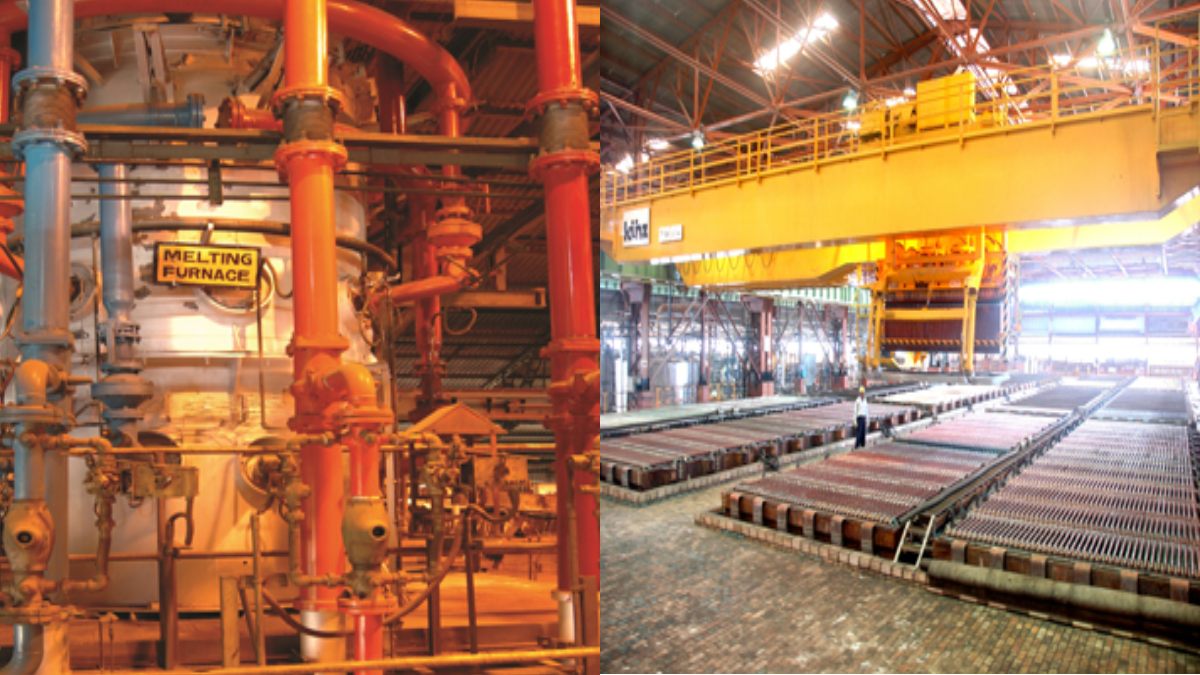
India needs to boost domestic copper and other important minerals supplies if it wants to boost domestic supply in order to compete for domestic output.
Hindustan Copper is still committed to a long-term growth strategy and the investment is very important for the state-of-the-art copper mining industry. Copper is widely used in power transmission, renewable energy infrastructure, electric mobility, telecommunications, construction and industrial equipment, with India’s growing energy and infrastructure demand driving the domestic mining capacity.
Hindustan Copper is targeting a large expansion in mining capacity. The company has previously stated that it intends to achieve 12.2 million tonnes per annum (MTPA) of mining capacity by 2030 - all of its activities are on track to meet this target, including mine development, capacity expansion and the revival of previously operated assets. HCL is also stepping up the exploration to increase its resources.
The company’s investment plans are for several areas of its business. Exploration will continue to be a key target, as finding new copper resources is essential for high production over the long term. Mine revival projects are also of high importance to making use of existing resources and infrastructure. Strategic partnerships are also being explored to enhance technical capabilities and expand opportunities in the mining and critical-minerals sector.
Hindustan Copper’s expansion is also driven by an increasing domestic appetite for copper supply security. India is currently dependent on imports for a very large proportion of its copper requirements, but demand will be increasing as industries invest in electrification and clean-energy technologies. More domestic mining output could thus help reduce some reliance on foreign sources and strengthen the country’s mineral security.
HCL’s recent operational performance provides further context for its expansion strategy. This year, HCL produced 3.67 million tonnes of ore, up 6% from the previous year. The metal-in-concentrate production reached 27,421 tonnes, up 9% year-on-year and the company’s highest in seven years. Copper metal-in-concentrate sales also reached 27,367 tonnes, the best performance in five years, the company said.
The capital expenditure will also be used to support the development of important mining assets. Hindustan Copper has been in a process of expansion of capacity at Malanjkhand Copper Project in Madhya Pradesh, Khetri Copper Complex in Rajasthan and Indian Copper Complex in Jharkhand. We are looking to increase the company’s overall mining capability and support longer-term production goals.
Exploration has already shown encouraging results for the company. In its previous corporate presentations, Hindustan Copper had also indicated that copper ore reserves and resources had increased as a result of higher exploration expenditure. The firm has also looked for opportunities to acquire promising copper deposits through mineral auctions, both in India and overseas. These initiatives are intended to establish a better pipeline of resources for future mining operations.
Strategic cooperation is another aspect of HCL’s expansion plans. The company has worked with international and domestic partners to develop knowledge and competencies in exploration, mining and mineral beneficiation, for example, and with Chile’s CODELCO to share knowledge and build capacity. It is this kind of partnership that could, in turn, help HCL understand and develop its technical skill and capacity when it will be working on more complex mining projects.
The investment programme also illustrates the changing role of copper in India's economic development. Copper is an important part of electrical wiring, transformers, renewable energy systems, electric vehicles and industrial machinery. As India builds power-generation capacity and solar and other clean-energy infrastructure, copper is likely to be inextricably linked to investment in infrastructure.
But implementing a large expansion programme will require careful project management. Mining projects can be faced with obstacles in the form of approvals, land, infrastructure, geological conditions, construction schedules and commodity-price fluctuations. Hence, it will be important to HCL in the long run that capital is utilized efficiently and that new capacity is put in place on time.
For Hindustan Copper, the investment is a huge step in its expansion plan. The company is trying to move beyond exploration, mine development, asset revival and strategic partnerships to accelerate its production capabilities. If the projects are completed, the expansion will help HCL to become a major player in India’s copper industry and will help to secure the country’s supply of a critical industrial metal.
The investment plan of ₹7,000-crore-plus reflects the increasing strategic importance of copper in India’s economy. With electrification, infrastructure, renewable energy and emerging technologies in sight, increased domestic production could play a bigger role. Hindustan Copper’s next five to six years will therefore be closely watched as the state-owned miner strives to convert investment into higher capacity and higher domestic copper output.





Comments
Please to leave a comment on this article.