
Uranium prices have risen to their highest level in almost seven months, as prices of the metal show a strong trend in the nuclear fuel market in light of long-term nuclear power demand outlook.
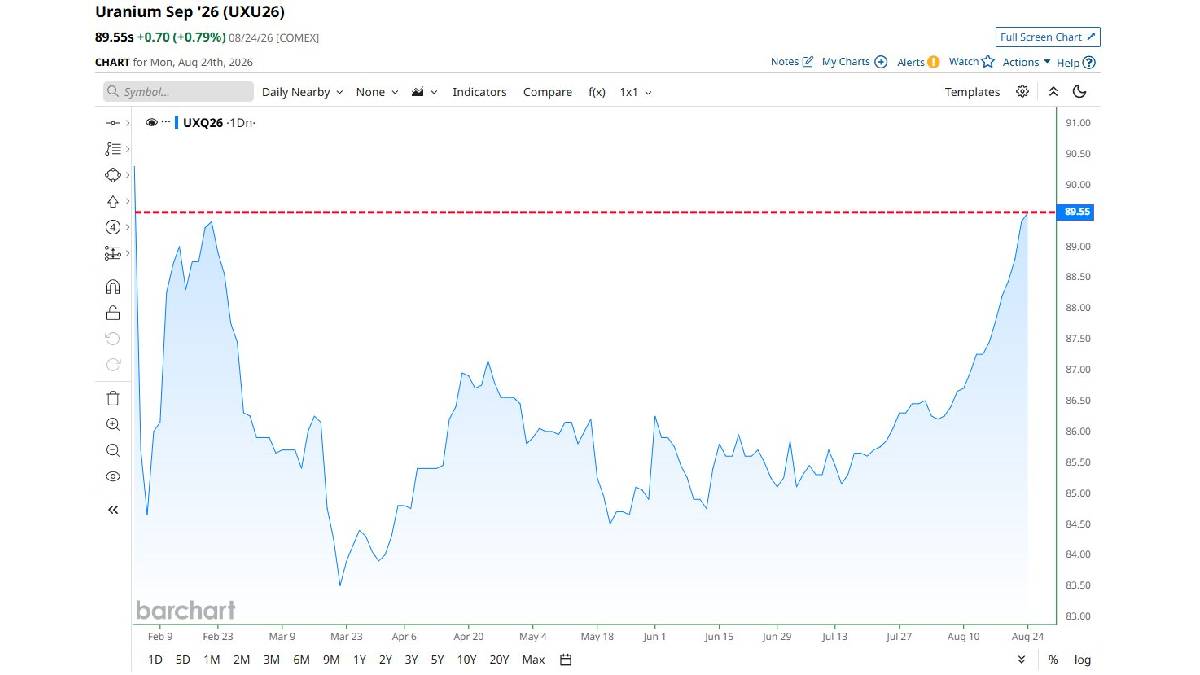
A recent market report shows uranium at $89.55 per pound with the price up 0.79% yesterday and up nearly 3.77 percent for the month. The commodity is also about 20% higher than it was a year ago.
Uranium continues to attract attention from investors and energy companies as nuclear power is a hot topic of national interest worldwide with an increase in global demand for nuclear power. Governments and utilities are increasingly looking at nuclear energy as reliable and low-carbon electricity and increasing electricity consumption is only adding to expectations for reactor demand in the future.
Uranium is the primary fuel used in conventional nuclear reactors. Unlike many commodities, however, uranium does not trade on a standard open exchange, as crude oil or copper. A lot of the physical uranium market is based on private agreements between producers and utilities.
Such a structure makes the uranium market particularly sensitive to changes in utility procurement strategies and expectations about future supply.
Long-term uranium prices are strong.
The growth in uranium extends beyond the spot market. TradeTech said that its long-term uranium price indicator reached $97 per pound of U3O8 at the end of June 2026, its highest level from about 18 years ago at the end of June 2026, which is the highest level in more than 18 years. This is due to stronger utility demand and the increasing utility consumption and expectations that increasing electricity consumption will increase U3O8 and nuclear fuel demand.
A market analysis also noted that long-term uranium contracts had reached about $94 per pound at the end of June, while spot uranium remained around the mid-$80s through early August.
The difference between spot and long-term price is significant because utilities often secure uranium through multi-year contracts to guarantee future fuel supplies. Stronger long-term contracting can therefore send an important signal about expectations for future nuclear-fuel needs.
Nuclear energy revival favors uranium.
The renewed interest in nuclear energy is an important theme in the uranium market’s long-term outlook. As electricity consumption increases with data centers, artificial intelligence infrastructure, and industrial electrification, there is a need for reliable electricity sources, which countries are looking for.
At the same time, new uranium mines can take many years. Analysts have recognized the difficulty of rapidly expanding supply because of lengthy project development timelines and the regulatory requirements associated with uranium mining and processing.
This creates a potential supply-demand imbalance if reactor construction and utility procurement accelerate faster than new production comes online.
U.S. uranium production has also been rising. According to the American Nuclear Society data from the U.S. Energy Information Administration, domestic uranium concentrate production in the first quarter of 2026 was more than 1.03 million pounds, the highest first-quarter production since 2015.
Despite production increasing, the market is still very much focused on future supply security.
What the uranium rally means?
The recent dollar move is important because uranium had experienced periods of consolidation after its earlier rally. But the rise back toward $90-per-pound indicates there is still interest in the commodity and it has a lot to offer.
But uranium prices are volatile and the latest advance does not guarantee a sustained rally. Spot transactions are only one part of the overall market and long-term contracts and utility purchasing decisions can have a much greater impact on the industry’s fundamentals.
For investors, uranium-related equities can also move differently from the underlying commodity because mining companies are sensitive to production costs, project development, financing requirements, and operational risks.
The recent uranium price surge also reinforces the general investment view about nuclear energy in the larger picture. And so if governments continue to support new reactors and existing nuclear plants remain operational for longer, demand for nuclear fuel could still be high.
With uranium now trading near a seven-month high and long-term contract prices at multi-year highs, market participants will be watching utility procurement, new reactor construction, and mining supply closely.
The uranium market’s current move is thus not just a short-term commodity cycle. It’s a signal of growing optimism that nuclear energy will be a bigger part of the world’s electricity supply in the future—and that could keep uranium at the center.




Comments
Please to leave a comment on this article.