
The central bank of India is likely to intervene to defend the rupee as the currency is under pressure against the dollar, but traders are closely watching the Reserve Bank of India's intervention in the foreign exchange market for several months.
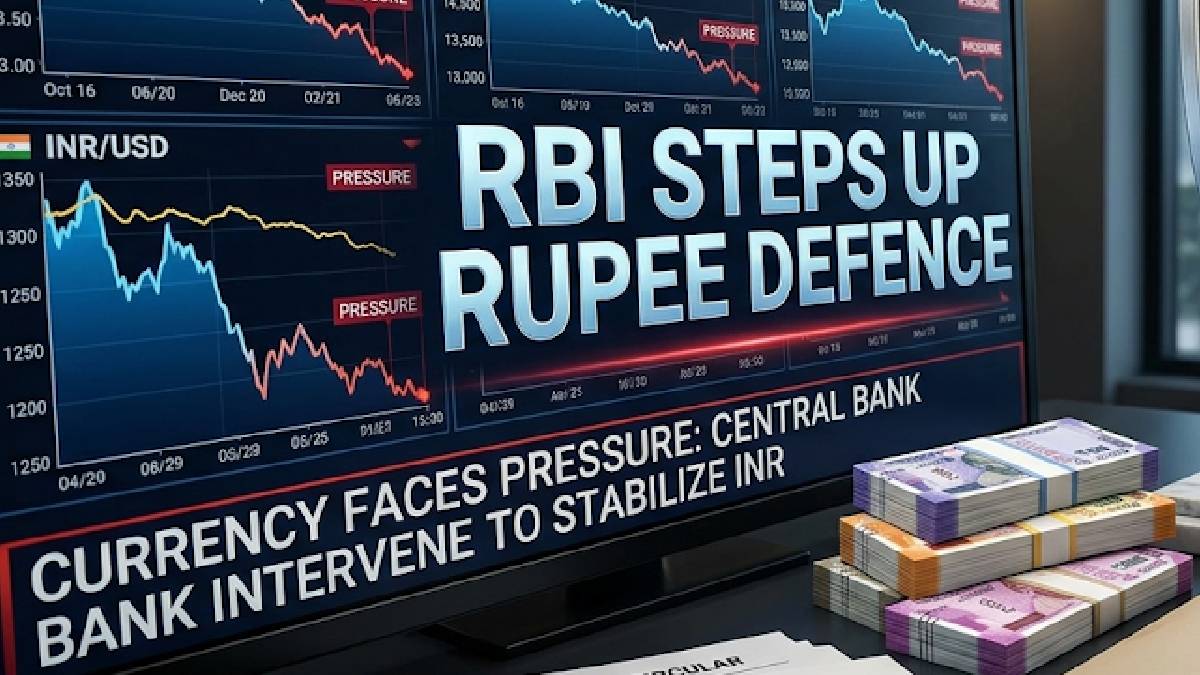
The rupee fell to around ₹95.49 per dollar on Monday but it was less on the back of the state-run bank selling dollars in the market. Four traders told Reuters that the dollar sales were likely on behalf of the RBI.
The intervention comes at an era of increasing uncertainty in the Middle East and high crude oil prices. Higher oil prices are important for India because India depends on imports to feed its crude oil needs. In case oil prices continue to rise, Indian oil companies and the importers will be more likely to import dollars and the rupee will be under pressure.
Brent crude was up about $88.8 a barrel last week and was around $88.8 a barrel today. A concern for India’s import bill and demand for foreign currencies are the import bill and foreign currency demand.

The foreign exchange market traders say RBI has been active in the foreign exchange market during the last week, apparently trying to keep there from too much volatility and keep the expectation of the rupee up and up. So the central bank intervened in the currency stayed within a narrow trade range despite the powerful external pressure.
The rupee had closed at ₹95.42 per dollar on Friday and was at a level of ₹95.45 that market participants believe RBI is trying to keep the currency around. In each of the last five trading days, the central bank sold dollars in order to keep the currency around ₹95.17 to ₹95.45.
The currency slide is also supported by strong dollar demand from importers and oil companies. That demand will only increase in the future if crude prices continue to rise because of geopolitical risk.
The RBI’s intervention is not necessarily to fix the rupee at a particular exchange rate. In general, intervention in India’s managed-floating currency market is designed to curb excessive volatility and to ensure orderly conditions in the foreign exchange market.
The central bank recently also said it would shorten the time for its discounted foreign exchange swap facility for non-resident deposits and so is heightening uncertainty for currency traders. It was not expected to close earlier than expected and market participants are now anxious about the dollar inflows in the future. The change contributed to the rupee falling yesterday to around ₹95.60 per dollar, the lowest level in two weeks, but there was suspected RBI intervention.
The special FCNR(B) deposit programme had attracted significant foreign-currency inflows. Reuters reported that almost $57 billion had been drawn through the RBI's foreign exchange swap measures, while other market estimates have pointed to substantial additional inflows before the facility closes.
The market players will also be watching RBI’s dollar sales and crude oil prices. A further rise in oil prices could put pressure on the rupee and the energy prices might mean higher demand for dollars and hence the need for dollars.
The RBI’s foreign exchange policy will also be closely watched because persistent intervention can have an effect on India’s foreign-exchange reserves. At the same time, orderly currency markets can help avoid sudden and destabilising moves that may affect import costs, inflation expectations and financial markets.
The rupee will remain relatively rangebound in the near future with RBI intervention keeping it from falling too far. The currency should trade between ₹95.00 and ₹95.50 in the week, but geopolitical issues and oil prices could change things around the world according to a market analyst.
The immediate focus will then be on the RBI's response to the situation in the oil market, the demand of the dollar from the importers and global risk sentiment.
The central bank’s intervention in the currency market is becoming a much more important factor as the rupee is under pressure. So whether or not RBI can keep the decline in check without too much volatility is to be closely watched by traders, importers, exporters and investors in the days to come.








Comments
Please to leave a comment on this article.