
Gold Imports India: India could explore innovative financial products to unlock the enormous amount of gold held privately in the country and reduce the need for fresh imports, according to Nilesh Shah, managing director of Kotak Mahindra Asset Management.
Shah presented a gold-backed stablecoin in the NDTV Profit Town Hall, arguing that India’s vast amount of privately held gold could be put to a much more productive financial use instead of mainly sitting idle.
Shah said Indians are among the world’s largest owners of gold and highlighted the huge amount of wealth locked in gold, silver, diamonds and pearls. And financial innovation would make some of these assets monetizable while decreasing the country’s dependency on imported bullion.
Nilesh Shah's Stablecoin proposal with Gold-backed support
Shah suggested that Indian startups could develop a stablecoin backed by gold, taking inspiration from existing international models.
He described the difference between a gold-backed crypto asset and stablecoins. A crypto asset that is directly linked to gold prices would generally pass the gains or losses in gold prices to the investor.
A stablecoin could be structured differently, where the issuer is able to retain the appreciation of the underlying gold. Shah compared this with stablecoins backed by US Treasury assets, with the yield generated by the underlying assets to the issuer.
According to Shah, a similar model could be explored with gold as the underlying asset.
However, the proposal would require a clear regulatory framework for custody, reserves, redemption, valuation, transparency and investor protection before such a product could be viable in India.
India sitting on vast amounts of gold wealth
Shah’s proposal comes at a time when India’s gold import bill has risen sharply.
According to Commerce Ministry data cited in the discussion, India's gold imports reached a record $71.98 billion in FY26, representing a 24% year-on-year increase.
Indeed, the import bill increased even though the amount of gold imported fell. Imports fell 4.76% to 721.03 tonnes from 757.09 tonnes in the previous financial year, in which imports were 757.09 tonnes.
This means that the increase in the value of imports was primarily driven by the huge increase in global gold prices rather than the physical import volumes.
If India is still one of the world’s largest gold-consuming markets, the high import bill can have implications for the country’s trade balance and foreign exchange outflows.
Shah Wants Gold To Become More Productive
Shah's broader argument is that gold already held by Indian households should be considered part of the country’s financial ecosystem.
A lot of household gold is outside formal financial channels. If that gold could be monetised through secure and regulated products, households could generate financial returns without necessarily selling their underlying assets.
Gold monetisation schemes are one avenue that could help achieve this.
Shah also suggested developing financial products that could tap into existing gold holdings, including financial instruments backed by physical gold stored in secure institutional vaults.
Gold options in mutual funds for investment in stocks and bonds
The Kotak AMC chief also reiterated his proposal for Sebi to allow mutual funds to use gold options.
Shah said options might enable fund managers to create products to protect against downside risk and still take part in gold's upside to a certain extent.
For instance, a fund could employ options as part of a strategy in which investors participate in gold price appreciation but take some downside risks in the process. But the exact structure, cost, and regulatory safeguards would determine whether these products could actually deliver the intended outcome.
But such products might also give investors a way to buy gold other than buying gold from physical stores.
Sovereign Gold Bond-Style Product
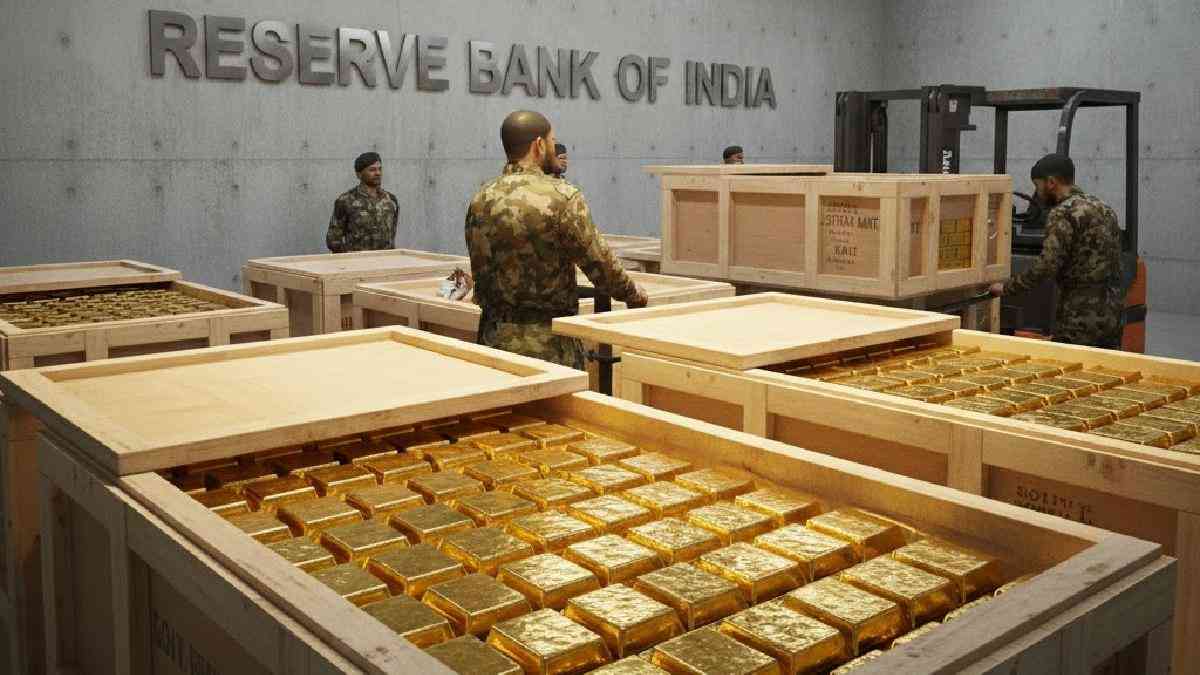
Shah also proposed the idea of a sovereign gold bond-style instrument backed with physical gold held in the Reserve Bank of India's vaults.
The idea is that India’s existing official gold holdings could potentially support additional financial products.
He also noted that privately held gold is not on the RBI's balance sheet, even though foreign exchange was spent when much of that gold arrived in the country.
A product backed by physical gold could possibly create a formal financial claim linked to the underlying asset, although such a structure would need careful consideration of ownership, custody and redemption mechanisms.
Can Financial innovation reduce Gold Imports?
And the bigger question is whether financial products can actually reduce India’s demand for imported gold.
Gold demand is influenced by a range of factors such as jewellery usage, investment preferences, cultural traditions and expectations on future prices. Financial products will not be enough to eliminate physical demand, after all.
However, if gold sellers are more likely to buy regulated financial instruments than physical gold, the demand for imported gold might also decline.
This also would reduce foreign exchange outflows and the exposure for gold traders.
Regulation Will Be Crucial
Any gold-backed stablecoin or similar product would need strong safeguards.
Investors would need confidence that every token or financial claim is adequately backed by genuine gold, that the underlying metal is independently verified and that redemption mechanisms work during periods of market stress.
Regulators would also need to address issues involving cryptocurrency rules, securities regulation, taxation, custody and investor protection.
In India, the challenge would be to foster innovation without having products that introduce new financial or systemic risks.
India's Gold Opportunity
Shah’s comments also highlight a bigger opportunity for India’s financial sector: turning dormant household wealth into productive financial capital.
With gold prices at their highest level and India’s annual import bill still not slowing down, innovative products may become more of a focus.
There is only one possibility: a gold-backed stablecoin. Gold monetisation schemes, regulated gold investment products, options-based strategies and physical gold-backed securities could form part of a broader effort to integrate privately held gold into the formal financial system.
Shah’s central message is that India already has enormous wealth in gold. The challenge is to find safe, transparent and regulated ways to put more of that wealth to productive use rather than continuing to rely predominantly on fresh imports.






Comments
Please to leave a comment on this article.