
India’s newly introduced Rs 62,500 crore Mobile Phone Manufacturing Scheme has the potential to transform the mobile manufacturing industry in India, but brokerages think the benefits won’t be distributed equally among companies.
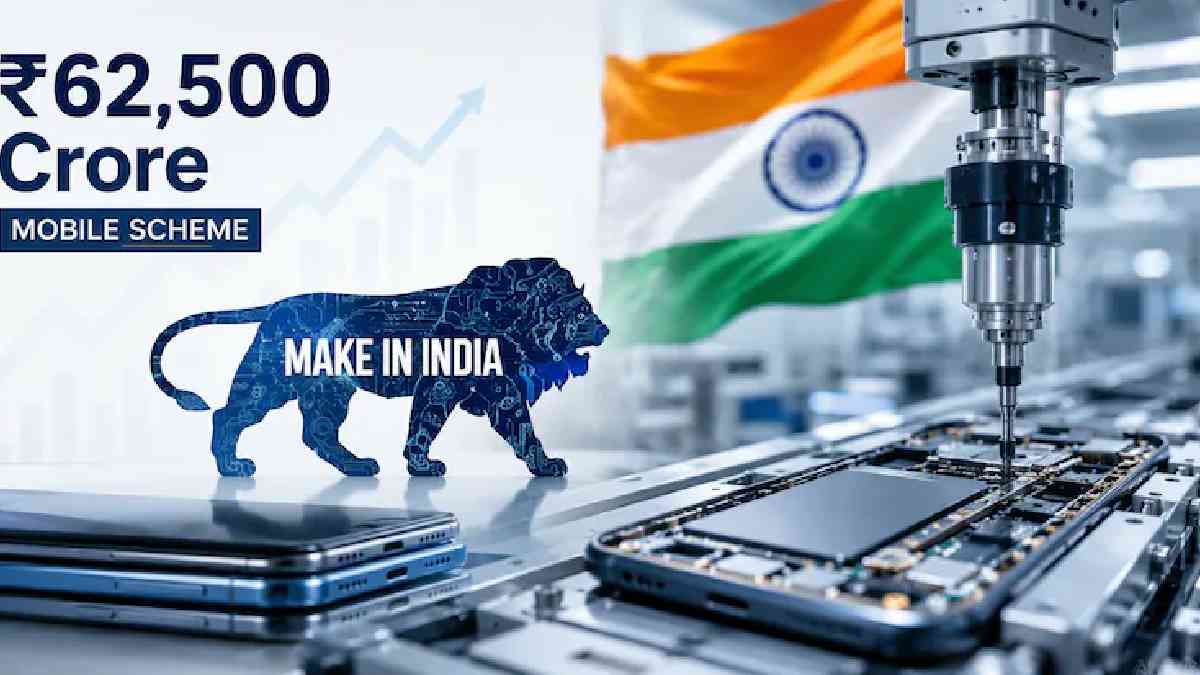
The five-year programme, from FY2026-27 to FY2030-31, is designed to encourage large-scale mobile phone manufacturing, higher domestic sourcing, exports and the development of Indian-owned mobile brands. While the scheme could strengthen India’s position as a global electronics manufacturing hub, the relatively high sales thresholds might make it difficult for many companies to qualify.
Brokerages have pointed out Dixon Technologies as one of the companies that could struggle to meet the requirements of the scheme, and Lava International is one of the domestic brands most likely to benefit.
New Scheme Focuses On Scale And Localisation
The new programme replaces the earlier Production Linked Incentive scheme for large-scale electronics manufacturing, which ended on 31 March 2026.
The government expects the latest initiative to generate cumulative mobile phone production of around Rs 39 lakh crore during its five-year tenure and create approximately 60,000 direct jobs.
The scheme is divided into two broad segments. The first is targeted at mobile phone manufacturers and electronics manufacturing services companies, and the second is for Indian-owned mobile phone brands.
According to brokers, the new framework focuses on sales growth, exports and domestic value addition in comparison to the old programme.
Dixon Technologies Under Eligibility Pressure
Kotak Institutional Equities said the new framework signals a shift towards scale and localisation but more specifically towards sales growth and domestic sourcing.
In the first segment, eligible manufacturers and electronics manufacturing services companies can receive incentives ranging from 2.25% to 5%.
Existing brands are required to grow annual sales by Rs 5,000 crore above their FY2025-26 sales. New brands, on the other hand, must reach annual sales of Rs 10,000 crore before they can meet the annual growth requirement.
For contract companies like Dixon Technologies, increased production volume and domestic sourcing would increase capacity utilization and potentially help in margins.
Kotak estimates that the scheme could add about 14-22 basis points to Dixon's EBITDA margin. Yet, the brokerage maintained its current estimates and said the scheme was unlikely to materially alter near-term financial projections.
Exports Become Critical
One of the main challenges under the new framework could be the need to achieve sufficient sales growth.
There are also brokerages that believe domestic demand alone may not be enough for some manufacturers to reach the required thresholds. So exports could be increasingly important.
CLSA added that companies with relatively weak export volumes could find it harder to qualify for incentives. Dixon was rated as an Underperform, and for it to have more exports to meet the scheme's criteria, the brokerage said.
The structure would help manufacturers to expand production for international markets and not just depend on India’s domestic smartphone market.
Lava Emerges As Potential Winner
The second segment of the scheme is aimed specifically at Indian mobile phone brands.
Companies seeking benefits under this category must have at least Rs 1,000 crore in turnover in FY2025-26 and meet conditions relating to Indian ownership, domestic intellectual property, trademarks, management control, shareholding and in-house design and research capabilities.
Eligible Indian brands can receive a 5% incentive, with an additional 3% incentive for Indian design and research and development. The scheme also includes non-fiscal support.
CLSA believes that very few companies are likely to satisfy all of these requirements and has also identified Lava International as the most likely beneficiary among Indian handset brands.
With the policy’s focus on Indian ownership and intellectual property, domestic brands would have a greater chance of being able to compete with global smartphone manufacturers.
Domestic Sourcing Gets Additional Push
The government has also introduced an additional incentive of up to 1.5% for domestic sourcing of important components and sub-assemblies.
However, companies must localise to at least 25% of total mobile phone units produced in a financial year to enjoy this additional benefit.
That could lead manufacturers and suppliers to develop more domestic supply chains and therefore reduce the dependency on imported components over time.
India Targets Global Electronics Leadership
The new scheme comes as India is on the verge of becoming a world electronics manufacturing leader.
The country says India is now the world’s second largest mobile phone manufacturer by volume, while smartphones became the country’s largest export product category in 2025.
Ashwini Vaishnaw, Electronics and Information Technology Minister, has also stressed the importance of developing Indian-owned mobile brands and intellectual property.
So the government’s strategy goes beyond increasing manufacturing volumes. It is to encourage companies to develop Indian technology, design capabilities and brands that can compete internationally.
The key challenge for manufacturers, like Dixon, will be to achieve the required scale and export thresholds. For Indian brands like Lava, the new framework could provide a huge opportunity if they satisfy the ownership, design and sales requirements.
The success of the Rs 62,500 crore scheme will depend on how companies increase production, exports and domestic value addition in order to build a stronger Indian electronics ecosystem.





Comments
Please to leave a comment on this article.