
Eggs, one of India’s most affordable sources of protein, are becoming more expensive as poultry farmers face a sharp increase in feed costs. Egg prices have increased by around 35-40% in the past year, the National Egg Co-ordination Committee (NECC) said, leading to fears that consumers could see another round of increases in the winter months.
Ex-farm egg prices are currently about ₹7 per egg, while retail prices in several Indian cities are between ₹8.50-₹9 per egg.
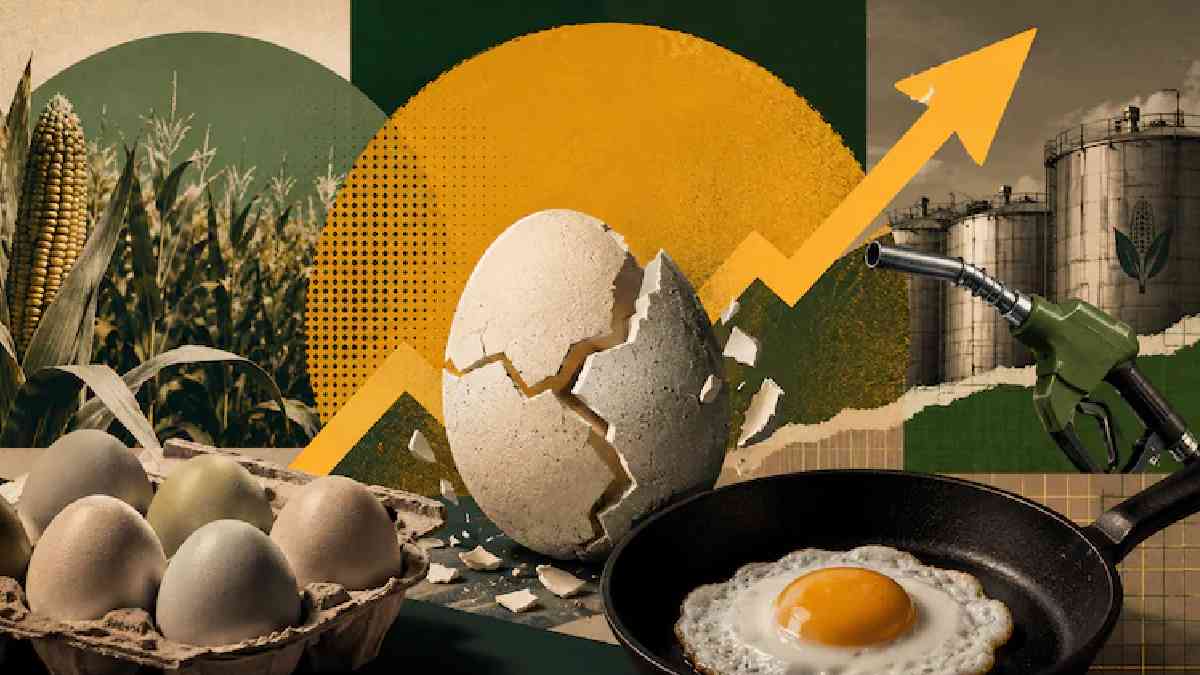
The increase in egg prices is linked to many factors, but the increasing demand for maize from ethanol producers has become an issue for the poultry industry.
Why are egg prices rising?
Maize is a key component of poultry feed and accounts for a significant portion of poultry production costs. According to NECC, maize can account for around 65-70% of poultry production costs, so any significant movement in maize prices directly relates to the price of eggs and other poultry products.
This trend of maize going to ethanol production has reduced supplies available to poultry farmers.
According to industry estimates cited in reports, about 37% of India’s maize production is now being directed towards ethanol distilleries. The shift has intensified competition between poultry producers and ethanol manufacturers for the same agricultural commodity.
Maize prices nearly double in three years
The pressure on poultry farmers is more evident when maize prices are taken into account.
For a tonne of maize three years ago, it was around ₹14,000. The price has increased to nearly ₹26,500 per tonne.
Much of the increase has occurred recently, with maize prices surging significantly in the past few months. Higher input costs have put poultry farmers under pressure and eventually the prices paid by consumers.
As feed becomes more expensive, producers do not have much choice but to raise selling prices in order to protect margins.
E20 policy contributes to maize demand
The situation is closely connected to India’s ethanol blending programme.
Under the programme, oil marketing companies blend ethanol with petrol to reduce dependence on fossil fuels and support the use of domestic agricultural feedstocks. India's petrol blending target has reached 20% ethanol, commonly referred to as E20.
Both sugarcane and maize are crucial feedstocks for ethanol production. And as ethanol manufacturers increasingly turn to maize, the poultry sector is in more competition for supplies.
The parliamentary data cited in reports indicates that India's maize production is around 43.4 million tonnes, with about 17 million tonnes being used in ethanol production.
The increase has been substantial in the past few years. Maize consumption by the ethanol industry was below 1 million tonnes in 2022, and it was reported that it will reach around 6 million tonnes in 2024 before reaching the current level.
Industry forecasts suggest that maize consumption for ethanol could increase further, potentially reaching 25 million tonnes by 2030.
Poultry industry faces a feed squeeze
The poultry sector is one of India's largest consumers of maize, reportedly accounting for around 60% of domestic maize consumption.
This puts poultry producers in direct competition with ethanol producers.
Poultry farmers also stress not only the availability of maize but also affordability. Even when there are some supplies available, high prices can drive up the cost of raising birds.
Higher feed costs ultimately impact the economics of egg production. Farmers need to take into account feed, labour, electricity, transportation, medicines, and other operating expenses before they determine selling prices.
Winter demand could push prices higher
Poultry industry executives say, however, they expect more pressure on poultry industry members in the winter months.
Egg consumption is traditionally strong in colder weather, and production can also be influenced by weather conditions, bird health, and mortality rates.
Industry representatives have cited other factors affecting production costs, such as heat stress, mortality, weather disruptions, and the cost of imported feed ingredients.
Therefore, maize is important, but that is not the only reason behind the increase in egg prices.
Other kitchen essentials are also getting expensive
The price of eggs is increasing right now when consumers are already dealing with higher prices for several kitchen staple foods.
Onion retail prices have significantly increased and are around ₹43.53 per kg nationally as of August 24 and around ₹60 per kg in Chennai. The government is also taking measures like “Kanda Express” to manage supply-related pressures.
Jaggery prices have increased by about 25% in Maharashtra and Uttar Pradesh in this past fortnight, with an average retail price of about ₹65 per kg.
Edible oil prices have also risen by almost 15% over this month, with retail prices rising above ₹200 per litre in some areas.
What this will mean for consumers
For a family, a few rupees in the price of an egg may seem insignificant. But the cumulative effect can be very big for families that purchase eggs and other food items every day.
A household that consumes 30 eggs a month, for instance, would see its monthly egg expenditure rise noticeably as retail prices rise.
The issue also highlights how policies made for one sector can have indirect consequences for another. The ethanol blending programme helps fuel diversification and stimulates agricultural commodities demand, but maize consumption also increases input costs for industries like poultry.
Will egg prices rise?
The direction of egg prices will be determined by maize availability, feed costs, poultry production, weather, and consumer demand.
If maize prices are high and ethanol demand continues to absorb a larger share of domestic production, poultry farmers could continue to be under pressure.
On the other hand, improved maize supplies, moderation in input costs, or changes in market demand could help ease some of the pressure.
And right now, strong maize prices, tight ethanol demand, and higher poultry production costs keep egg prices at the front of people’s minds.
As India’s E20 programme continues to expand, the competition for maize between fuel production and food production could become an increasingly important factor in determining the price of everyday foods.
Disclaimer: This article is for informational purposes only. Prices and industry estimates can change depending on market conditions, supply, demand, and government policies.






Comments
Please to leave a comment on this article.