
Delhi Chief Minister Rekha Gupta has launched an ambitious message for young people and aspiring entrepreneurs to go beyond the usual career options to build businesses that can create jobs and contribute to the economy.
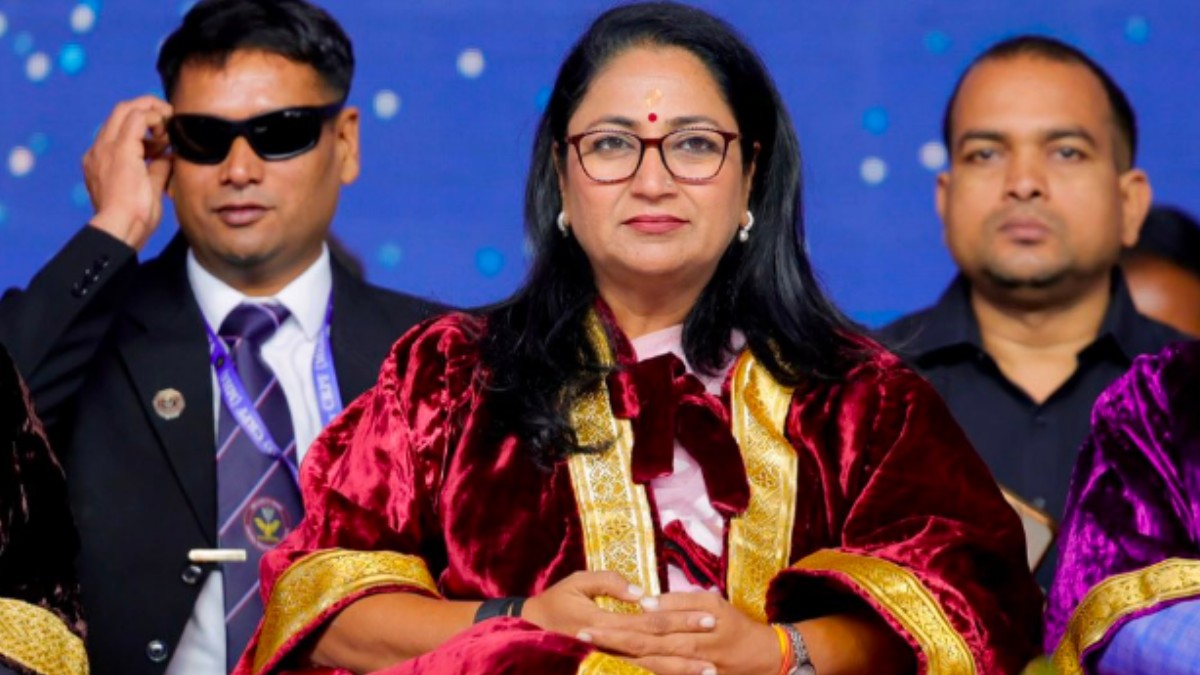
In a statement that has received great attention, Gupta urged young people not to focus on a salary package of ₹1 crore but to concentrate on building a company with a value of ₹1,000 crore in mind.
The remark is indicative of a larger conversation around entrepreneurship, innovation and job creation in India. As the country’s economy grows and its startup ecosystem develops, policymakers have increasingly emphasized the necessity for young people to be job creators and not just to be limited to traditional job opportunities.
Gupta’s message is pretty much to change how young people view professional success. A high-paying corporate job can provide financial security and career growth, but the success of a firm can create opportunities for hundreds or thousands of other people. The difference between a ₹1 crore package and a ₹1,000 crore company was thus an incredibly powerful way to incite entrepreneurship and ambitious dreams.
The statement comes at a time when entrepreneurship is an increasingly popular career option among India’s younger generation. Technology and digital platforms, online markets and increased investment opportunities have lowered some of the traditional barriers to starting a business. Young entrepreneurs today can build companies serving customers not only in their own cities but also at the international level.
But building a ₹1,000 crore company is much more difficult than getting a high-paying job. Entrepreneurship involves uncertainty, financial risk, competition and the possibility of failure. A successful business is much more than a big vision. Entrepreneurs need a viable product or service, a sustainable business model, strong leadership, access to capital and the flexibility to adapt to the changing market.
Gupta's message can be understood as being an invitation to think bigger rather than to reject salaried jobs. High-paying professional careers remain an important part of India’s economy and companies require a good mix of engineers, managers, doctors, financial professionals, researchers and other specialists to work for them as well. Entrepreneurship is also a route through which talented workers can promote the development of the economy.
The idea of building a large company also has employment generation implications. The success of a successful business will create direct jobs and support thousands of additional livelihoods via suppliers, distributors, service providers and other businesses. This multiplier effect is one reason governments often promote entrepreneurship and small and medium-sized enterprises.
Delhi’s business ecosystem could be helped further if it promotes entrepreneurship. The city has a huge pool of educated people, commercial districts, technology companies, educational institutions—and it has access to markets in northern India. Policies that promote startups, innovation and skill development would help more young entrepreneurs convert their ideas into sustainable businesses.
The ₹1,000 crore figure Gupta used in her statement is particularly striking because it suggests a scale of ambition, not just a financial one. Building a company of that size generally requires solving a major problem for a large number of customers. It can also take years of experimentation, investment and expansion.
Young people considering entrepreneurship should now consider real market opportunities and not just look for valuation targets. A good business is only built with products or services that customers will pay for. Long-term growth is about sustainable growth, responsible financial management and customer trust.
The statement also comes as India continues to grow as a major startup ecosystem. Indian entrepreneurs have set up companies in the areas of financial technology and e-commerce, healthcare, education, logistics, artificial intelligence and renewable energy. Small-scale startups with small teams have flourished by developing scalable business models.
At the same time, the startup environment has become more competitive. Investors are now more keen on profitability and sustainable growth, and strong fundamentals than growth at any cost. This means aspiring entrepreneurs must merge ambition with careful planning and execution.
Gupta’s message could thus be interpreted as a call for young Indians to broaden their definition of success. Rather than measuring achievement only in terms of salary, professional titles or employment at prestigious companies, young people can also consider the impact they can create through entrepreneurship.
Young and mid-career professionals who are trying to figure out what to do and what direction to take would be especially interested in this idea. Not everyone is required to be an entrepreneur, and building a large company is not for everyone. But good entrepreneurial skills—problem solving, innovation, leadership, financial intelligence can be useful regardless of one’s profession.
The vision and message of the statement is about ambition and nation building. A ₹1 crore salary might represent individual success, while a ₹1,000 crore company could potentially represent a much broader economic contribution through employment, innovation, investment and tax revenues.
Whether every aspiring entrepreneur will be able to achieve such a scale is impossible to predict. But Gupta’s statement has reignited a conversation about getting young people to look beyond career paths and to pursue new ways to create businesses that grow and create value.
As the economy of India develops, the next generation of entrepreneurs will play an important role. Young Indians who have viable ideas and the drive to implement them shouldn’t just find a job they will like; they should also think about how to create something that is good for many others.






Comments
Please to leave a comment on this article.