
China’s yuan has risen more than 9% against the dollar in the past four months, which is a dramatic change in the relative performance of the two currencies.
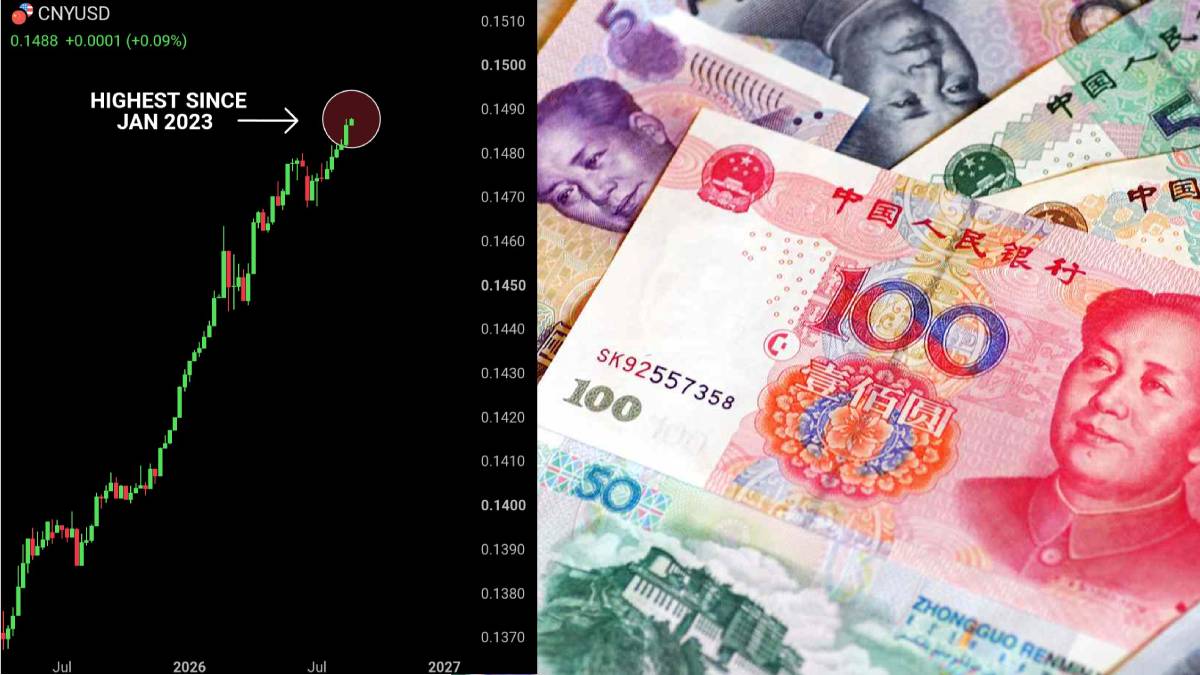
The dollar is now around 6.72 yuan and the yuan is at about $0.1488, its highest level since last year.
The market is also anxious about the direction of US monetary policy, and the inflation, economic growth and signals from the Federal Reserve and market are now weighing the outlook for US interest rates. US data has also been mixed and that has caused volatility of the dollar.
How is the Yuan strengthening?

A key factor behind the yuan is China's strong external trade position. A large trade surplus has led to an ongoing demand for the Chinese currency as exporters convert foreign earnings into local ones and international trade flows are still flowing.
In fact, Reuters recently reported that the yuan was at its highest level against the dollar since 2023 and its large trade surplus has helped drive China's dollar stronger than ever before. The People's Bank of China has been taking its daily currency fixing mechanism to contain the pace of appreciation.
China’s currency system is not a completely free-floating exchange rate. The yuan is traded within a daily trading band around the central parity rate set by the People's Bank of China. On August 26, the central parity rate was set at 6.7829 yuan per US dollar, allowing the currency to move within a 2% band around the daily fixing in China's onshore market.
China’s economy is also being affected by the strength of the yuan. A stronger yuan can make imported goods, raw materials and commodities cost relatively cheaper for Chinese businesses and consumers. It can reduce the yuan cost of servicing some foreign-currency obligations.
But a rapidly appreciating yuan can cause problems for exporters. When the yuan rises, Chinese products become more expensive in foreign-currency terms, putting pressure on manufacturers that compete mainly on price in international markets.
Impact on Global Markets
The yuan's rise is significant beyond China's borders because it is one of the world's most widely traded currencies and an important component of global trade and financial flows.
A stronger yuan could affect commodity prices, Asian currencies and investor expectations on China’s economic outlook. It could also affect companies with big Chinese imports, exports or supply chains.
The development is especially interesting because it comes at a time when investors are questioning the long-term strength of the US dollar. The dollar has been under pressure from concerns surrounding US fiscal policy, interest rate expectations and the relative performance of other major economies.
At the same time, China’s economic picture is mixed. Data recently has pointed to slower growth, while Beijing has taken further policy steps to stimulate investment and boost economic activity. China recently opened applications for an 800 billion yuan ($119 billion) policy-financing tool to help local government projects and strategic sectors, Reuters reported.
What is next for the Yuan?
The yuan’s next direction will be influenced by various factors including US Federal Reserve policy, China’s economic performance, trade flows and decisions made by the People’s Bank of China.
As for the market, markets will monitor whether Chinese authorities will decide whether the value of the yuan will remain strong or intervene more aggressively to curb the currency from being too strong. For policymakers, that is the challenge for them to balance stability of the currency with the competitiveness of China's export sector.
But the yuan’s move has now been a big change in foreign exchange direction around the world. A more than 9% rise in four months and the strongest since January 2023 underline the extent of the currency’s recent comeback.
The development also reflects a broader trend in international markets: while the US dollar remains the global dominant reserve currency, the value of the currency fluctuates and can be very damaging to other major currencies, such as the Chinese yuan. International investors would be closely watching today’s rise in the yuan to see whether that is a sign of a new trend or a temporary uprising but also a brief period in an increasingly volatile world economy of currency markets that will be the start of a longer-term trend.






Comments
Please to leave a comment on this article.