
Nvidia could be generating a huge amount of free cash flow, with Bank of America analysts forecasting at least $1 billion of free cash flow a day in the upcoming year. That kind of cash-generation profile would provide Nvidia with a lot of revenue to fund its AI ecosystem ambitions and a lot more capital to return to shareholders.
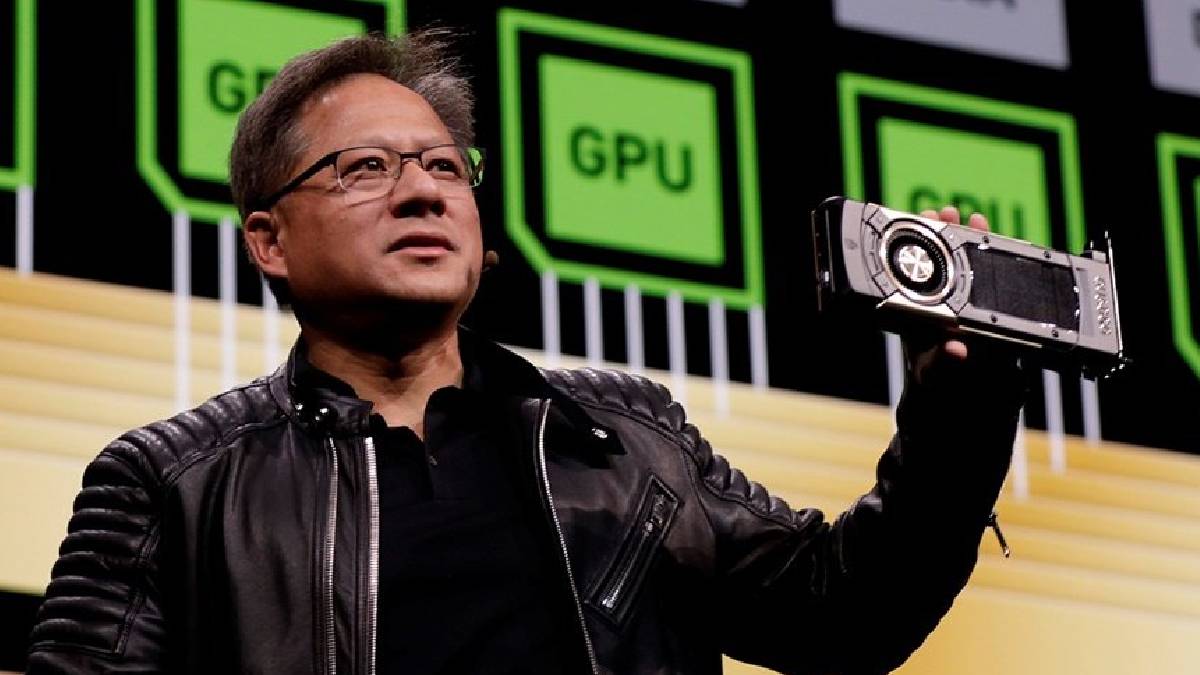
The bullish outlook comes as investors are paying more attention not just to Nvidia’s explosive revenue growth, but to its ability to turn that growth into cash. Nvidia ended fiscal 2026 with $96.6 billion in free cash flow, according to market data, demonstrating the immense cash generation capacity Nvidia has from demand for its AI accelerators.
At $1 billion a day, Nvidia’s free cash flow will be roughly $365 billion annually if it continues this pace. That would be a huge increase from the company’s already huge cash flow and change how it uses capital.
Cash Could Be Nvidia’s Next Big advantage.
Nvidia’s primary growth engine is its data-center business, where hyperscalers, cloud providers and AI companies are still investing in computing infrastructure.
And now the company is moving into another phase of the AI infrastructure boom and its new Rubin platform will be a big driver of future expansion. Nvidia needs to be able to keep the pace of growth up as the market shifts from Blackwell to new architectures. Analysts expect Nvidia's third-quarter revenue to be around $104.2 billion, up 82.8% year-over-year.
If those growth expectations are achieved, Nvidia’s cash generation could continue growing fast.
Bank of America has argued at the time that increasing cash returns could be a major catalyst for Nvidia's stock. Vivek Arya, a fellow analyst at Bank of America, said a more aggressive capital return approach would expand Nvidia’s shareholder base and might close a valuation gap.
That is why our latest free cash flow projection is particularly significant.
Funding the AI Ecosystem
Nvidia is no longer just selling chips to the AI ecosystem. And it’s becoming an important financial player in the infrastructure being built around those chips.
Nvidia has also provided a lot of financing support for AI infrastructure projects, including commitments to OpenAI and other ecosystem partners. Recently Reuters reported that Nvidia has arranged $500 billion in financing for AI infrastructure and guaranteed as much as $105 billion to support a major OpenAI data-center lease.
These commitments have raised some anxiety among investors to be able to have much longer-term financial exposure to Nvidia’s traditional semiconductor business.
But the company’s enormous cash-generation potential provides management with a great financial cushion.
It’s basically the bullish thesis: Nvidia can help drive the AI ecosystem expansion while generating enough cash to maintain a strong balance sheet and return capital to shareholders.
Buybacks Could Get That Much More Important.
The biggest impact of the free cash flow is that Nvidia can buy back its own shares.
Share buybacks can increase earnings per share by reducing the number of shares outstanding. For a company generating hundreds of billions of dollars in annual cash, even a portion of that amount towards repurchases could matter.
Bank of America had also identified increasing cash return as a potential catalyst for Nvidia's valuation.
If Nvidia eventually reaches a point where its infrastructure commitments consume a smaller percentage of operating cash flow, management could have more flexibility to increase buybacks, dividends or other forms of shareholder returns.
That might change the way investors view Nvidia—from a high-growth semiconductor company to a high-growth technology company with an enormous and increasingly predictable cash engine.
But the Commitments come with Risks
The bullish cash-flow argument does not eliminate risks.
Nvidia is increasingly dependent on AI infrastructure. Nvidia has been providing backstops and guarantees for more than $230 billion in lease obligations and residual-value support agreements, which raises the risk of Nvidia’s increasing role in the financing of the AI ecosystem.
Morgan Stanley has also raised concerns about Nvidia’s growing financial obligations and the possibility that contingent liabilities could become substantial over time.
In this sense, the company is in a delicate balancing act: to maintain the infrastructure to grow demand for the chips and not to come out with a lot of financial risk.
The competition is also a factor. AMD, Intel and other big tech companies developing custom AI accelerators are also competing against Nvidia's supremacy. Investors are tracking Nvidia's performance in the AI market as the AI market develops, Reuters said.
Nvidia’s cash story is also becoming as important as its AI story.
For years, Nvidia’s investment thesis has been revenue growth and its supremacy in AI chips for years. But gradually, free cash flow is becoming more and more a part of the story.
If Bank of America’s prediction is correct, Nvidia could have a lot of financial flexibility by next year. At the same time, almost $1 billion in free cash flow every day would provide vast resources for research and development, acquisitions, ecosystem investments, infrastructure commitments and shareholder returns.
The big open question to investors is whether Nvidia can maintain the combination of AI demand, strong margins and fast cash-flow growth required to sustain the future revenue growth needed for those projections.
And for now, Bank of America’s view strengthens Nvidia’s financial strength and it may be an advantage that goes beyond its semiconductor technology.
The company is now one of the most powerful cash-generating businesses at the center of the global AI buildout—and if free cash flow approaches the levels projected by Bank of America, Nvidia could have huge resources to shape the next phase of the AI industry.





Comments
Please to leave a comment on this article.